New Patients Welcome!



Dental bleeding can be a scary experience, especially when you’re dealing with oral trauma. Whether it’s from an unexpected accident, an intense sports injury, or even gum disease, knowing how to manage bleeding properly is crucial. If left unchecked, dental bleeding can lead to infection, pain, or other serious issues.
Knowing how to respond when dental bleeding occurs can make all the difference in controlling the situation. In this post, we’ll walk you through step-by-step pressure techniques that can help stop dental bleeding effectively, giving you peace of mind during an emergency.
If you ever find yourself in need, don’t hesitate to contact an emergency dentist to guide you through the process.
Understanding Dental Bleeding
What Causes Dental Bleeding?
Dental bleeding can be caused by a variety of factors, ranging from trauma to ongoing oral health issues. Some common causes include:
- Accidents and Injuries: A fall, a blow to the face, or sports-related injuries are some of the most frequent causes of dental trauma that can lead to bleeding.
- Gum Disease (Gingivitis and Periodontitis): Swollen or inflamed gums due to plaque buildup can lead to bleeding, especially when brushing or flossing.
- Dental Procedures: Routine cleanings or other dental treatments might cause temporary bleeding, especially if the gums are sensitive or inflamed.
- Tooth Extraction: Post-extraction bleeding is common and usually manageable with proper care.
- Braces or Retainers: If you wear braces, wires and brackets can sometimes irritate your gums and cause them to bleed.
When Should You Be Concerned?
While occasional dental bleeding can be common and manageable, it’s essential to recognize when it’s a more severe issue. If the bleeding persists or seems excessive, it might be time to consult with an emergency dentist in Forest Hill. Here are some signs that indicate you should seek professional help:
- Continuous Bleeding: If the bleeding doesn’t stop after 10 to 15 minutes of applying pressure, it could indicate a more serious injury or underlying issue.
- Large Cuts or Wounds: Large cuts in the gums, lips, or other oral tissues may require medical intervention.
- Broken Teeth: If broken or missing teeth accompany the bleeding, there’s an increased risk of infection, and professional dental care is necessary.
- Signs of Infection: Pus, swelling, or fever can be signs of infection, which requires prompt attention.
Understanding these signs can help you determine when it’s best to seek emergency care.
Step-by-step Pressure Techniques for Stopping Dental Bleeding
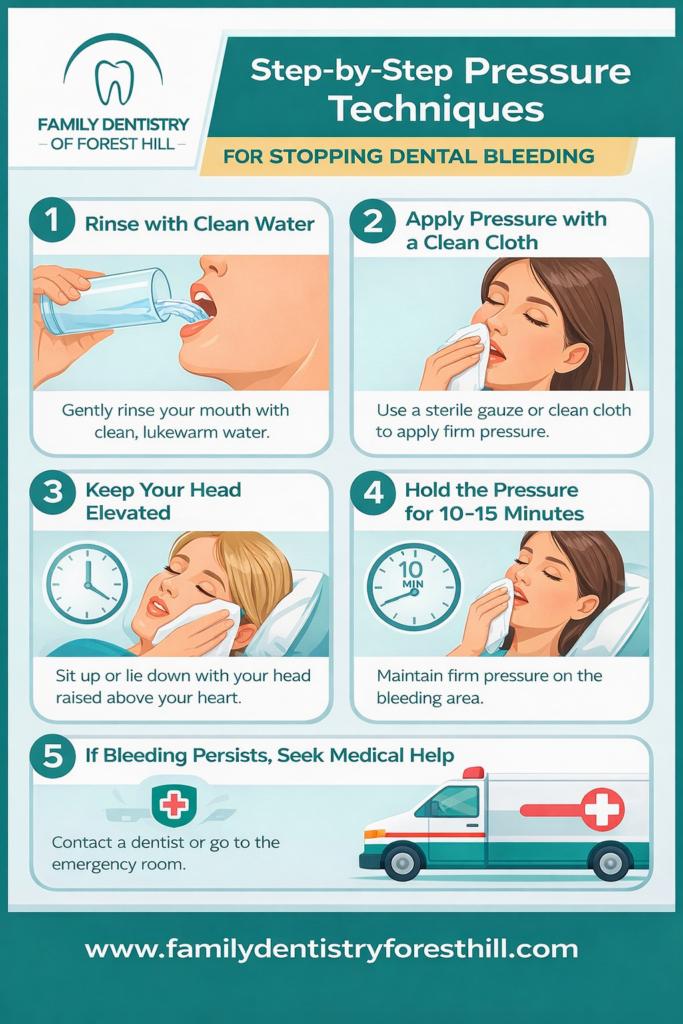
Dental bleeding can be alarming, but knowing how to manage it can prevent complications and help you feel more in control. Follow these step-by-step pressure techniques to effectively stop dental bleeding.
Step 1: Assess the Situation
When dental trauma causes bleeding, the first thing you should do is stay calm. Panicking can make the situation feel more overwhelming. Take a moment to assess the injury carefully. Check where the bleeding is coming from is it from a cut on your gums, a broken tooth, or the inside of your cheek? Identifying the source will help you apply the right technique and prevent further damage.
If the bleeding is coming from a cut or gum injury, it’s important to remember that while it might look intense, most of the time, it can be controlled with simple techniques. However, if it’s from a tooth that has been knocked out or a broken tooth, you may need to take additional steps to protect the area from infection.
Step 2: Rinse with Clean Water
After assessing the injury, rinse your mouth with clean, lukewarm water to remove any blood and debris. Rinsing helps clear out the area and makes it easier to see the extent of the injury. Be gentle with your rinsing—don’t swish vigorously, as this can worsen the bleeding. Avoid using mouthwash or any strong chemicals, as they could irritate the tissue and make things worse.
If you are dealing with a tooth injury, try to keep the area as clean as possible while still being gentle. This will help prevent bacteria from entering the wound and causing an infection. It also gives you a clearer view of the injury, so you can make informed decisions on what to do next.
Step 3: Apply Pressure with a Clean Cloth
Now that the area is clean, it’s time to apply pressure to stop the bleeding. Take a clean cloth, gauze pad, or sterile bandage, and gently press it against the bleeding site. If the injury is on the gums or inside your mouth, fold the gauze or cloth into a thick layer for better absorption.
Apply gentle but firm pressure to the area for about 10-15 minutes. The key here is to avoid checking the wound too soon. Constantly removing the pressure may cause the bleeding to start again, which can be frustrating. Trust the process. Keeping the pressure on for the full time is crucial to helping the blood clot.
Step 4: Keep Your Head Elevated
If you’re sitting or lying down, make sure to keep your head elevated. Elevating your head helps to reduce the blood flow to the injury site, which in turn limits the amount of bleeding. Lying flat can encourage blood to pool in the affected area, potentially causing the bleeding to worsen.
Try to stay seated with your head propped up by pillows. This will make it easier for your body to naturally slow down the blood flow and begin the clotting process. If you’re helping someone else with dental bleeding, encourage them to keep their head up, too.
Step 5: Hold the Pressure for 10-15 Minutes
One of the most important steps in controlling dental bleeding is allowing enough time for the blood to clot. Holding the pressure on the affected area for 10-15 minutes is crucial. This is typically enough time to stop the bleeding in most cases.
Do not check the wound too early. Removing the pressure could disturb the clotting process and cause the bleeding to start again. Even though it may feel like a long time, try to stay patient and resist the urge to peek at the wound.
If, after 15 minutes, the bleeding is still heavy, continue applying pressure for another 10 minutes. Often, bleeding from a simple cut or injury can stop after one or two rounds of pressure application.
Step 6: If Bleeding Persists, Seek Medical Help
In some cases, dental bleeding may not stop after following the above steps. If the bleeding persists for more than 30 minutes or if the bleeding is excessive, it’s time to seek professional help.
If the injury involves broken or knocked-out teeth or if there is visible damage to the bone, you should call an emergency dentist right away. A dentist can examine the injury and determine whether additional treatment is necessary, such as sutures or a more advanced procedure to address the trauma.
Signs that you need immediate professional help include:
- The bleeding doesn’t stop even after applying pressure for 30 minutes.
- The injury involves broken or knocked-out teeth.
- There are signs of infection, such as swelling, pus, or a fever.
- The bleeding is so severe that it is difficult to breathe or swallow.
In these cases, don’t wait. Contact an emergency dentist in Forest Hill as soon as possible. The sooner you get professional care, the sooner you’ll be on your way to healing.
Additional Tips for Preventing Future Dental Bleeding
Preventing dental trauma and bleeding starts with taking care of your teeth and gums. Here are a few tips to help prevent future dental bleeding:
Use of Mouthguards for Sports:
If you or your children are active in sports, wearing a mouthguard can significantly reduce the risk of dental trauma. Mouthguards act as a protective barrier, minimizing the chances of getting cuts or losing teeth during contact sports.
Good Oral Hygiene:
Proper oral care is essential for keeping your gums healthy and preventing gum disease, which can lead to bleeding. Brushing twice a day, flossing daily, and using antibacterial mouthwash can help prevent plaque buildup and gingivitis.
Regular Dental Checkups:
Visiting your dentist regularly for checkups and cleanings is crucial. Professional cleanings remove tartar buildup that regular brushing cannot, and your dentist can spot early signs of gum disease or other oral issues before they become serious.
These preventive measures not only help maintain healthy teeth but also reduce the likelihood of dental trauma and bleeding.
When to Seek Professional Help
Severe or Persistent Bleeding:
If the bleeding continues for more than 10-15 minutes, or if it’s accompanied by pain, swelling, or infection, it’s time to see a professional. A dentist will be able to assess the injury, stop the bleeding, and provide any necessary treatment to avoid complications.
Dental Trauma to Children:
If your child experiences a dental injury, it’s essential to seek professional help. Children’s teeth and gums are more delicate, and proper care is required to ensure no long-term damage occurs. Your dentist can evaluate the situation and recommend the best course of action.
Dental bleeding can be a frightening experience, but knowing how to respond can make all the difference in ensuring your oral health remains intact. By following the pressure techniques outlined above, you can effectively manage dental trauma and bleeding in most situations. However, if bleeding persists or if there’s significant injury, don’t hesitate to reach out to an emergency dentist for professional care.
If you’re concerned about recurring dental bleeding, schedule a consultation with our team at Family Dentistry of Forest Hill today. Our professional team is here to help you maintain your oral health and prevent future issues. Don’t wait. Your smile deserves the best care!
People Also Ask
How long should I apply pressure to stop dental bleeding?
Apply pressure for at least 10-15 minutes to help the blood clot and stop the bleeding.
Can I use a tissue instead of gauze to apply pressure?
It’s best to use a clean cloth or gauze as they are more absorbent and will apply firm, even pressure.
What if the bleeding doesn’t stop after 15 minutes?
If the bleeding continues after 15 minutes, apply pressure for another 10 minutes. If it still doesn’t stop, seek emergency dental help.
Can I lie down while dealing with dental bleeding?
No, you should keep your head elevated to reduce blood flow to the injured area.
What if I lose a tooth and it’s bleeding?
Apply pressure and try to preserve the tooth by placing it in milk. Contact your dentist or visit the emergency room as soon as possible.