New Patients Welcome!


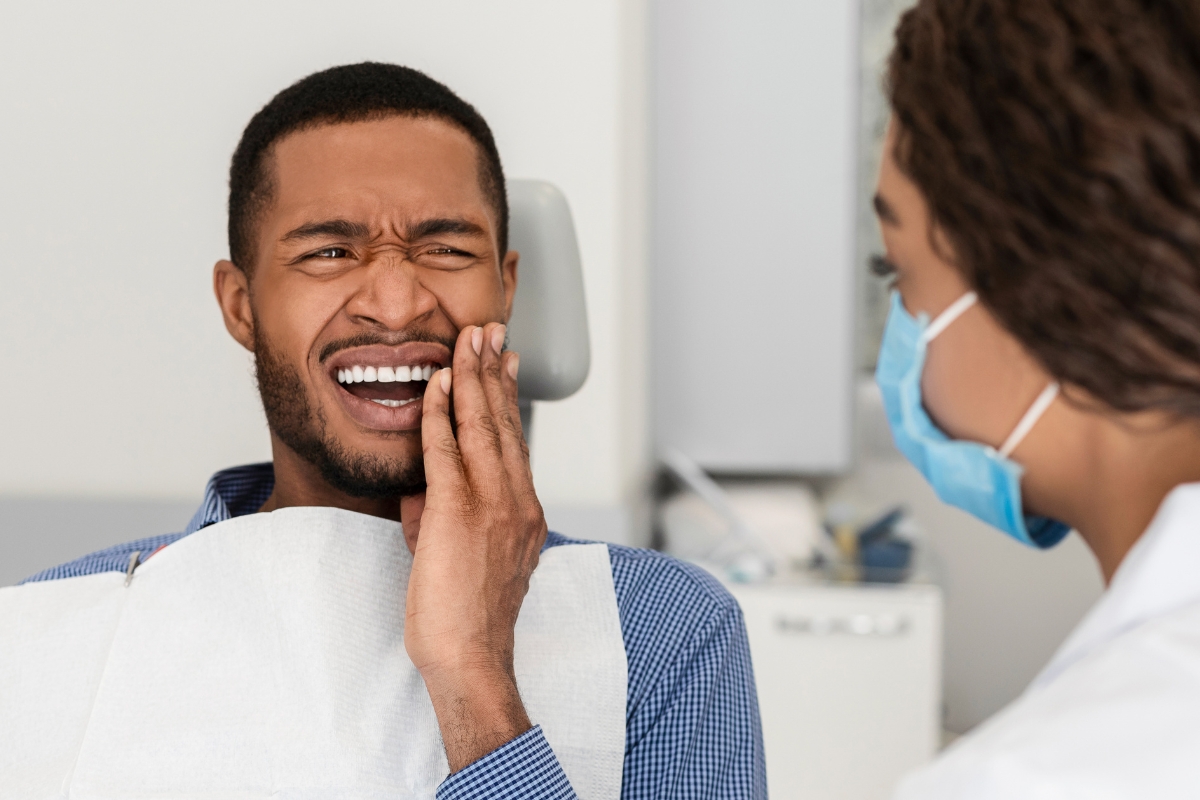
Holiday weekends are supposed to be the best parts of the year – family gatherings, cookouts, travel, time away from routine. But they also happen to coincide with spikes in dental emergencies. Chipped teeth, lost fillings, abscesses that suddenly become unbearable, knocked-out teeth from outdoor activities – the timing always seems to be the worst possible.
This isn’t a coincidence. There are well-documented reasons why dental problems cluster around holidays and weekends, and knowing them can help you avoid becoming a statistic. This blog breaks down the causes, what qualifies as a true dental emergency, and what to do if you find yourself in pain when your regular dentist’s office is closed.
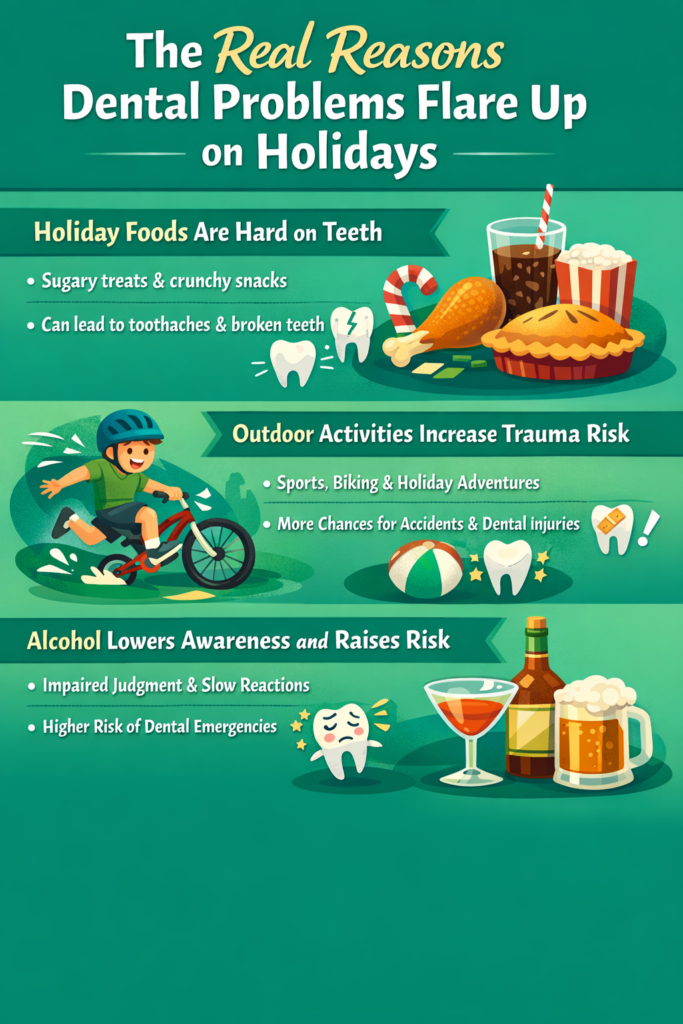
The Real Reasons Dental Problems Flare Up on Holidays
It might seem like bad luck, but dental emergencies during holidays follow a predictable pattern. Several factors, such as dietary changes, physical activity, delayed care, and disrupted routines, converge at once, creating conditions in which existing dental vulnerabilities are pushed past their limits.
Whether you’re spending the weekend at Okeeheelee Park with family or heading to Palm Beach Gardens, having access to a reliable emergency dentist in West Palm Beach matters more during these stretches than any other time of year. Here’s exactly why emergencies go up and what’s driving each one.
Holiday Foods Are Hard on Teeth
Holidays revolve around food, and the foods associated with them tend to be the ones that stress teeth the most. Think about what shows up at an unusual holiday table or summer barbecue: hard candies, brittle toffee, caramel, corn on the cob, hard rolls, ribs, and ice-cold drinks. These foods place pressure on teeth, and for teeth with weakened enamel, old fillings, or hairline cracks, one bite in the wrong direction can be enough to cause a fracture.
Sugar consumption also increases dramatically during holiday periods. The American Dental Association notes that frequent sugar exposure combined with inadequate brushing accelerates decay and can lead to a cavity that causes acute pain or an abscess. A tooth that was “fine” for months can turn into a weekend emergency with enough sugar and disrupted oral hygiene.
Outdoor Activities Increase Trauma Risk
Holidays mean more time outside, and more time outside means more physical activity. Sports, pickup games, cycling, swimming, and general roughhousing all carry a real risk of dental trauma – a knocked-out tooth, a cracked incisor, or a lip laceration that also damages adjacent teeth. According to the American Association of Endodontists, sports-related dental injuries account for a significant portion of adult dental emergencies each year.
In South Florida, water sports, paddleboarding, and beach volleyball are constant fixtures of holiday weekends. Any activity that involves contact, speed, or unpredictable falls creates oral trauma risk, and most people aren’t wearing mouthguards during casual recreational activities, even though they should be.
Alcohol Lowers Awareness and Raises Risk
Alcohol is common among many holiday gatherings, and its effects on dental health are often overlooked. Beyond the direct impact of sugar and acidity in many alcoholic beverages, alcohol reduces pain sensitivity and impairs judgment. This means people are more likely to bite down on something hard, grind their teeth without noticing, or ignore early warning signs of a problem that’s getting worse.
Dry mouth (a common side effect of alcohol) also accelerates the risk of both decay and gum irritation. Saliva normally cleans acids and rinses the mouth; without it, bacteria thrive. A holiday weekend of heavy drinking, irregular brushing, and rich food is a recipe for a Monday morning dental emergency.
People Put Off Care Until It Becomes Urgent
Dental problems rarely appear out of nowhere. Most emergencies are preceded by days or weeks of low-level warning signs – tooth sensitivity, a loose filling, or gums that bleed a little more than usual. During the workweek, people often think, “I’ll call and make an appointment,” but when a long weekend arrives, the plan gets pushed aside in favor of holiday plans.
Then the food, the activity, and the stress of the holiday weekend push that already-vulnerable tooth or gum over the edge. What would have been a manageable fix on a Tuesday afternoon becomes an urgent, painful problem by Sunday night when the office is closed. This cycle of ignoring dental pain, delaying treatment, and emergency oral care plays out more consistently during holiday periods than at any other time.
What Counts as a Dental Emergency?
Not every dental issue demands the same-day attention, but certain situations absolutely do. Getting this distinction right can save you unnecessary panic or prevent you from dismissing something that genuinely needs urgent care.
Situations that warrant immediate treatment include:
- A knocked-out permanent tooth: Time is critical here. If you can get to a dentist within 30 to 60 minutes of the tooth being avulsed, reimplantation is sometimes possible. Keep the tooth moist – in milk or a tooth preservation kit and call immediately.
- Severe or throbbing toothache: Persistent, intense pain if it wakes you at night or doesn’t respond to over-the-counter pain relievers – often signals an abscess or pulp infection that needs treatment before it spreads.
- Visible swelling in the jaw or face: Facial swelling from a dental source is potentially serious. A spreading infection near the airway can become a medical emergency. Don’t wait on this one.
- A cracked or fractured tooth with pain: A clean chip without pain can often wait a day or two. But if the fracture causes sharp pain when biting or lingering sensitivity, it likely involves the nerve and needs prompt evaluation.
- A lost crown exposing a sensitive tooth: If the exposed tooth is causing significant pain or sharp sensitivity, this needs to be addressed quickly to avoid further damage to the underlying structure.
What to Do While You Wait for Emergency Care
When you’re dealing with a dental emergency and can’t get to a dentist immediately, a few practical steps can reduce pain and prevent the situation from worsening:
- Rinse your mouth gently with warm salt water to reduce bacteria and soothe inflamed tissue
- Apply a cold compress to the outside of your cheek for swelling – 20 minutes on, 20 minutes off
- Take ibuprofen (if you’re not contraindicated) rather than aspirin, which can thin blood and make dental work more complicated
- For a lost filling, dental wax or sugar-free gum can temporarily cover the exposed area and reduce sensitivity
- Avoid eating on the affected side and stay away from extremely hot, cold, or sweet foods until you’ve been seen
These measures manage discomfort – they don’t treat the underlying problem. Seeing a dentist as soon as possible remains the only real solution.
Dental Pain Shouldn’t Have to Wait Until Monday
The pattern is consistent: holidays mean more dental problems, and the timing always feels wrong. But having a dentist you can actually reach during a weekend or holiday stretch changes the experience entirely – from a painful wait to a problem that gets handled.
Family Dentistry of Forest Hill provides access to an emergency dentist in West Palm Beach who takes urgent cases seriously and makes room for patients who need to be seen quickly. If you’re dealing with dental pain right now, don’t ride it out.
Call Family Dentistry of Forest Hill today or book online. Same-day appointments are available for dental emergencies because some things really can’t wait.
People Also Ask
How quickly does a dental abscess become dangerous?
In severe cases, an untreated abscess can spread to the surrounding tissue, the jawbone, or even the neck and head within days. Most abscesses don’t escalate that quickly, but there’s no reliable way to predict progression without clinical evaluation. Any abscess accompanied by fever, difficulty swallowing, or significant facial swelling should be treated as a medical emergency, not just a dental one.
Can I go to a hospital emergency room for a toothache?
Yes, and in certain situations you should, especially if you have swelling spreading toward your throat or eye, a high fever alongside dental pain, or difficulty breathing or swallowing. Hospital ERs can treat infections and manage pain with medications, but they typically can’t perform dental procedures. You’ll still need to follow up with a dentist for the actual treatment.
What should I do if a child knocks out a baby tooth?
Unlike permanent teeth, a knocked-out baby tooth should not be reimplanted, as doing so can disrupt the development of the underlying permanent tooth. The priority is to control any bleeding (gentle pressure with gauze) and to call your dentist to have the area evaluated. They’ll check for bone injury or fragments and advise on any needed space maintenance.
How do I prevent a dental emergency during a holiday trip?
The most effective step is getting a checkup before you travel. Any existing issues that are “stable but present”, a loose crown, a cavity that hasn’t been addressed, a tooth your dentist has been watching, are more likely to become problems under the conditions of holiday travel. Pack dental wax, ibuprofen, and your dentist’s after-hours number as part of your travel prep.
Is a cracked tooth always an emergency?
Not always. A minor chip on a front tooth with no pain can often wait a day or two for a non-urgent appointment. But a crack that causes pain when biting, lingering sensitivity to temperature, or any crack on a molar that bears heavy chewing pressure should be evaluated promptly. Cracks that reach the nerve or extend below the gumline require more complex treatment, the longer they go unaddressed.