New Patients Welcome!


Your face changes in ways that are easy to miss at first. The corners of your mouth drop slightly. Your lips look thinner. Your teeth seem shorter or darker than they used to. These aren’t random — they’re often connected to changes in your smile, and they add up over time in ways that affect how old you appear, sometimes more than wrinkles do.
The good news is that many of these changes are reversible. Modern cosmetic dentistry addresses the structural and aesthetic causes of facial aging with more precision than most people realize.
Why Your Smile Is Central to How Old You Look
Teeth support your lips and cheeks from the inside, maintain the vertical height of your face, and anchor the appearance of your lower third — the area from your nose to your chin. When teeth wear down, shift, or are lost, that support diminishes. The result is a collapsed, sunken look that no amount of skincare can fully address because the cause is structural rather than surface-level.
Patients working with a cosmetic dentist in West Palm Beach often come in focused on one specific concern — discoloration or a chipped tooth — and leave having addressed a much more comprehensive picture of how their smile was affecting their overall appearance.
Tooth Wear Is More Common Than People Think
Enamel doesn’t grow back. Over the decades, grinding, acidic foods, and normal wear and tear gradually reduce the height and sharpness of your teeth. A study found that nearly 60% of adults show some degree of tooth wear by their 30s. As teeth shorten, the distance between your nose and chin decreases, which deepens nasolabial folds, creates jowling, and makes the entire lower face look heavier and older.
Rebuilding tooth height through composite bonding, porcelain veneers, or full-mouth rehabilitation restores facial proportion, often producing a genuinely striking lift in appearance.
Treatments That Make the Biggest Visual Difference
Not every cosmetic procedure has the same impact on how old you look. Some treatments are primarily aesthetic refinements; others create meaningful structural change. Here’s where the real results tend to come from:
- Porcelain veneers: Thin ceramic shells placed over the front surfaces of teeth simultaneously restore shape, length, and color. They also add a subtle light-reflective quality that makes teeth look vital rather than flat.
- Composite bonding: A more conservative option that rebuilds chipped or worn edges directly on the tooth. When done well, bonding restores proper tooth length and symmetry without removing significant enamel.
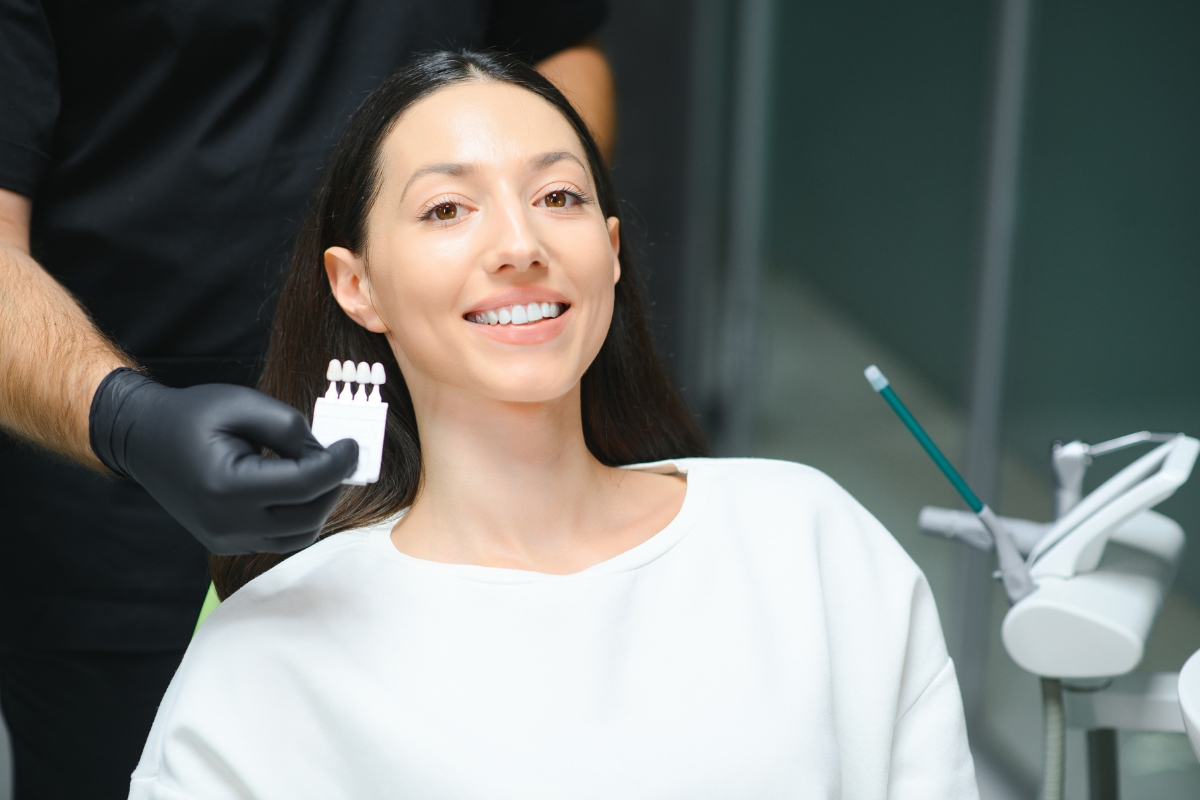
- Teeth whitening: Professional-grade whitening addresses intrinsic staining that over-the-counter products rarely reach. Brighter teeth read as healthier and younger — research consistently links tooth color to perceived age and attractiveness.
- Dental implants and bridges: Missing teeth cause bone resorption over time, which can permanently alter the jaw’s shape. Replacing them preserves bone volume and restores facial support, helping prevent the sunken look associated with tooth loss.
Each of these treatments addresses a different layer of the aging process. A well-planned approach considers all of them together.
The Smile-Face Connection Most People Overlook
There’s a reason cosmetic dentistry and facial aesthetics overlap so significantly. The lips frame your teeth, and your teeth frame your face. Thin-looking lips are often a product of reduced tooth support behind them — not just natural volume loss. Restoring tooth structure and length can visibly project the lips forward and restore a fuller appearance without any filler.
This is especially relevant for patients in their 40s, 50s, and beyond. For anyone considering cosmetic work in the area, consulting a West Palm Beach cosmetic dentist about full-face impact tends to offer more satisfying results.
What a Smile Makeover Involves
The term “smile makeover” gets used loosely, but it refers to a planned combination of cosmetic and restorative procedures tailored to your specific anatomy and goals. It typically begins with a comprehensive assessment of your bite, tooth structure, gum health, and facial proportions. Digital imaging tools now allow you to preview results before any treatment begins, removing much of the uncertainty that once held patients back.
Starting With What Bothers You Most
You don’t have to overhaul everything at once. Many patients start with a single concern — a discolored tooth, a worn edge, a gap — and build from there. What matters is that the work is planned with the full picture in mind, so early decisions don’t limit what’s possible later.
The most effective approach is a conversation, not a catalog of procedures. Describe what you see when you look in the mirror. A thorough assessment will clarify which changes are achievable, what the timeline looks like, and what sequence makes the most clinical sense.
Your smile has more influence over how you look than most people give it credit for. If you’ve been noticing changes in your appearance that feel frustrating or hard to place, your teeth may be a bigger part of the story than you’d expect. Reach out to schedule a consultation and find out what’s actually possible.
People Also Ask
Q: At what age do teeth typically start affecting facial appearance?
Visible changes often begin in the late 30s to 40s, when cumulative enamel wear becomes more pronounced and minor tooth loss or shifting starts to affect facial support. However, heavy grinders or those with a history of dental trauma may notice changes earlier.
Q: How long do porcelain veneers last?
With proper care, porcelain veneers typically last 10 to 20 years. They’re not indestructible — hard foods and grinding can chip them, but they’re among the most durable cosmetic restorations available and maintain their color far better than composite alternatives.
Q: Is cosmetic dentistry only about appearance, or does it have health benefits too?
Often both. Restoring worn or missing teeth improves chewing function, reduces strain on the jaw joint, and can prevent further structural damage. Treating a misaligned bite through cosmetic work also reduces the risk of cracking or fracturing healthy teeth over time.
Q: Will cosmetic dental work look natural?
Modern materials like high-quality ceramic and composite mimic the translucency and texture of natural enamel. When treatment is planned carefully with attention to shade, shape, and proportion, the results are generally indistinguishable from natural teeth.
Q: Can cosmetic dentistry help with jawline definition?
Indirectly, yes. When the vertical dimension (the space between your nose and chin) is restored through rebuilt or replaced teeth, the lower face regains its proper proportions. This can reduce the appearance of jowling and create a more defined jawline without surgical intervention.